Precision needle reducing treatment is a specialized cold-forming manufacturing technique utilizing CNC spinning and progressive drawing to transition the outer and inner diameters of stainless steel tubing while strictly maintaining wall thickness uniformity.
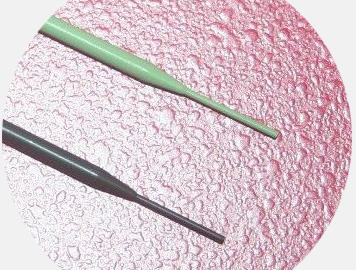
Figure 1: King Square CNC Tapered & Reduced-Diameter Precision Needles
1. Technical Parameters & Tolerances
- Wall Thickness Uniformity: Variation across the necking transition is controlled below 5%, preventing localized weak zones or flow constriction.
- Diameter Transition Range: Outer diameter reductions from Φ3.0 mm down to Φ0.35 mm; wall thickness ranging from 0.10 mm to 0.30 mm.
- Transition Zone Length: Fully programmable taper angle (from gradual 3° tapers up to rapid 45° transitions).
- Multi-stage Intermediate Vacuum Annealing: Relieves internal mechanical stress, preventing stress corrosion cracking and preserving toughness.
2. Why Needle Reducing is Critical in IVD Instruments
In high-speed liquid handling workstations:
- High Mechanical Rigidity: The larger upper shank (e.g. OD 2.0 mm) withstands high-speed acceleration (up to 3G) without flexure or vibration.
- Micro-Volume Piercing Tip: The reduced lower section (e.g. OD 0.7 mm) enters narrow 96-well / 384-well microplates and pierces vacuum tube caps with minimal resistance.
- Smooth Inner Transition: CNC mandrel drawing guarantees an internal mirror finish without steps or sharp transitions, preventing liquid turbulence and bubble formation.