

Start from the method and its risk assessment
Map the sample entry point, shared deck operations, control positions and waste handling before selecting hardware. Bring the proposed movements, cap opening, liquid transfers and fault recovery into the laboratory's protocol-driven risk assessment. The suitable controls depend on the materials and the work being performed. Published methods are a starting point for the applicable test, and any automation change must be evaluated in the context of that method. [1] [2]
Define what the instrument records at each handoff. A useful event record contains the vessel or plate identifier, operation, time and outcome. Preserve the source-to-destination path through serial transfers, including any skipped or held positions. This makes it possible to identify affected results when a worklist interruption breaks the intended order.
Keep contamination evidence visible
Use the controls required by the method and retain their deck positions and processing order in the run record. If a background signal appears only around particular positions, review contact surfaces, transfer history and proximity. If it appears across a batch, examine shared supplies and steps. Continue the laboratory's investigation under its established procedure before releasing affected results. [1] [2]
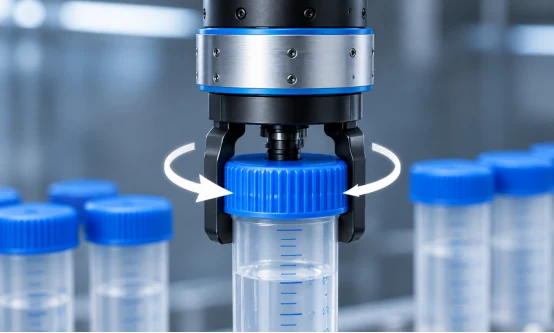
Keep cap identity and tube orientation visible in the sequence. A gripper may complete its motion while a cap remains partly engaged. Validate cap and rack compatibility and use a defined exception when the station cannot confirm its required state. Test this behavior before using routine laboratory materials.
Check transfers using safe surrogates
Use safe test liquids to measure transfer bias and repeatability at relevant liquid levels, across channels and after pauses. A tracer can help the engineering team find whether a transfer or mix changed a dilution series. Compare measured values across positions so a weak channel does not disappear in the average. These engineering checks characterize the workstation. The laboratory's method verification determines whether the complete workflow is suitable. [2] [3]
When a dilution series drifts, use the earliest position where the tracer or recorded operation changes. Check the recorded source level, destination position and dispense behavior at that point. Reviewing the first affected transfer avoids treating every later position as a separate fault.
Choose the right automation boundary
A pipetting module handles transfers, while a gripper or rotating claw handles labware or caps. Decide which device can confirm its operation and how the system responds if confirmation is absent. Qualify the combined workflow with missing vessels, incorrect cap types and interrupted runs using benign test materials. The resulting exception record is part of what the laboratory needs to audit a run. [1] [3]